A shared view of risk.
Bring priorities, evidence, investment requirements and decisions into a consistent management picture.

NIS2 readiness & cyber resilience
Practical expertise, AI-supported guidance and a connected platform to help Irish organisations assess readiness, prioritise improvement and build lasting cyber resilience.
18 questions · About 5 minutes · See results before registering
Clear owner / Target date / Closure evidence
Clarity before complexity
Understand what matters for your organisation, what needs to change and how you will demonstrate improvement.
Whether you are exploring direct regulatory exposure or responding to customer and supply-chain expectations, a credible starting point is a documented view of your scope, risks and existing controls.
Our NIS2 Readiness & Cyber Resilience Programme combines assessor-led review with OptiToolkit, keeping evidence, decisions and actions connected as the work progresses.
The assurance lifecycle
Start where you are. We can focus the engagement on your current stage, or support the full lifecycle.
Confirm scope and the target CyFun level. Review stakeholder input and submitted evidence to establish a baseline and map applicable NIS2 requirements.
Turn gaps into an actionable programme. Train your team to maintain actions and evidence, and distinguish task completion from control effectiveness.
Month 1 focuses on mobilising priority workstreams, agreeing governance and putting the first progress reporting in place.
During months 2–6, review progress, examine new evidence and support monthly risk management committee meetings. Escalate unresolved risks and decisions.
At the closing reassessment, planned for month 7 in the full programme, revisit agreed controls against the original criteria and report verified improvement.
Scope is agreed with your organisation. Remediation leadership and support are included in the relevant phases; technical implementation remains with your team or delivery partners.
Useful outputs. Lasting capability.
Bring priorities, evidence, investment requirements and decisions into a consistent management picture.
Connect each action to an owner, milestone, dependency and escalation path. Make overdue work easier to address.
Review client-submitted evidence and reassess agreed controls. Distinguish activity from demonstrated improvement.
Powered by OptiToolkit
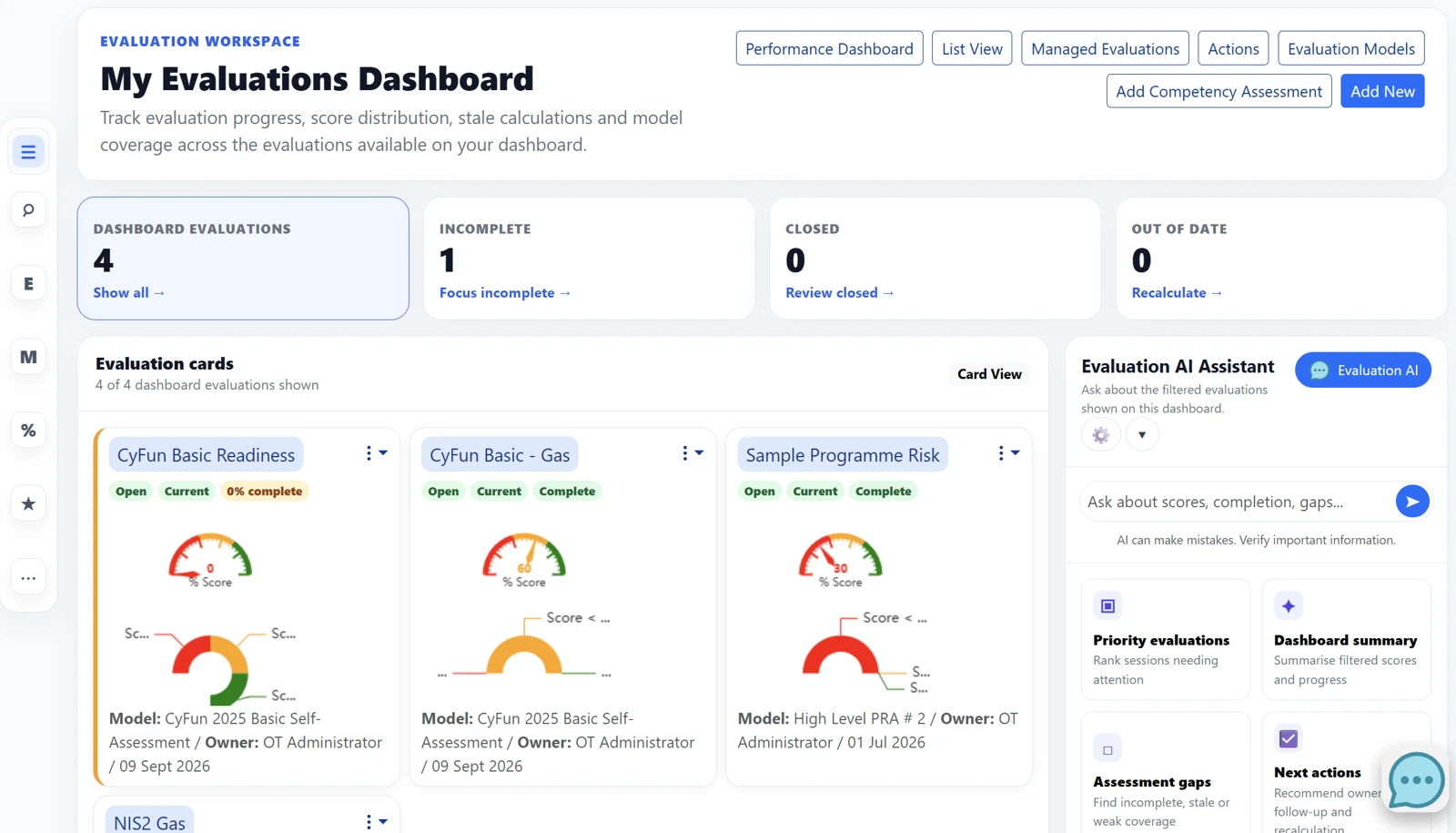
Connect assessment evidence, remediation actions and performance trends. Dashboard-aware AI helps your team review gaps, understand priorities and consider next actions using the records already in view.
Proactive support & practical guidance
Contextual AI supports your team between programme reviews.
Use dashboard signals and AI analysis to explore weak or declining coverage, incomplete assessments and gaps needing follow-up.
“What needs attention first?”
Ask about the filtered records in view. Generate suggested actions and return to the underlying evidence.
“What should we address next?”
Summarise findings and priorities to support management discussions and traceable follow-up.
“Which gaps need a management decision?”
Example prompts. AI supports analysis; your team verifies recommendations and retains decisions.
Explore OptiToolkit’s AI workspaceLead assessor
Cyber resilience, incident response
and regulatory assurance
Expertise with operational depth
Patrick brings more than 30 years of leadership across cyber investigations, intelligence, ICT operations, digital forensics and resilience.
A former Head of Operations at the Garda National Cyber Crime Bureau, his experience includes major-incident response, international law-enforcement collaboration and chairing the EU Cybercrime Taskforce.
The programme combines that operational perspective with risk governance, evidence review and a practical approach to remediation.
Discuss your organisation’s prioritiesBefore you begin
Clarity on scope, ownership
and what each starting point offers.
Applicability depends on your organisation’s activities, sector, size and other criteria. Our paid service includes a documented applicability review, distinguishing direct regulatory exposure from customer or supply-chain expectations. The free check does not determine legal applicability. Refer to Ireland’s NCSC guidance for current official information.
The free check is an 18-question self-assessment based on your answers. It takes about five minutes, with results shown before optional registration. It does not review evidence or certify readiness. The paid assessment establishes an agreed scope and reviews client-submitted evidence to support a baseline and prioritised programme.
The CyberFundamentals framework provides a structured basis for reviewing cybersecurity controls. We agree an appropriate Basic, Important or Essential target and use the current CyFun framework to organise assessment, evidence and improvement. A framework assessment is not a guarantee of regulatory compliance.
Dashboard-aware assistants help review gaps, priorities and suggested actions within your current context. They complement assessor guidance. People verify the output and approve follow-up.
Our scope is remediation leadership and support. Your internal team or delivery partners carry out technical implementation. Penetration testing, forensic investigation, security operations monitoring, major system configuration, extensive policy rewriting, legal opinions and independent certification are outside the standard scope.
Yes. We can focus the engagement on your current stage in the lifecycle. The reference scope assumes one entity, one primary site, 10–12 stakeholder interviews and a sample of up to five critical suppliers. We agree phases, outputs and pricing before work starts.
The programme includes OptiToolkit enablement and user training, with access for five users through the agreed programme and reassessment. Onsite days apply to the planning and monthly support scope; the full programme includes a management-body cyber-governance workshop. A tabletop exercise is not included. Access can be renewed or extended, or data exported when the engagement ends, under the agreed terms.
No. It supports readiness, risk reduction and evidence of implementation. Management retains responsibility for its obligations and decisions. The service does not provide a legal opinion or independent certification.
Your next step
Tell us where you are in the lifecycle. We’ll discuss the appropriate scope, priorities and service phases for your organisation.
Discuss your programme Contact the OptiToolkit teamStart with the free NIS2 readiness check. See your results first, then choose whether to request a summary or conversation.
Take the free check 18 questions · About 5 minutes