Multiple work queues
Triage, deadlines, approvals, submissions and actions need one operational view.

Coordinate operational incident queues and broader assurance programmes from connected workspaces that preserve ownership, evidence, findings, deadlines and follow-up.
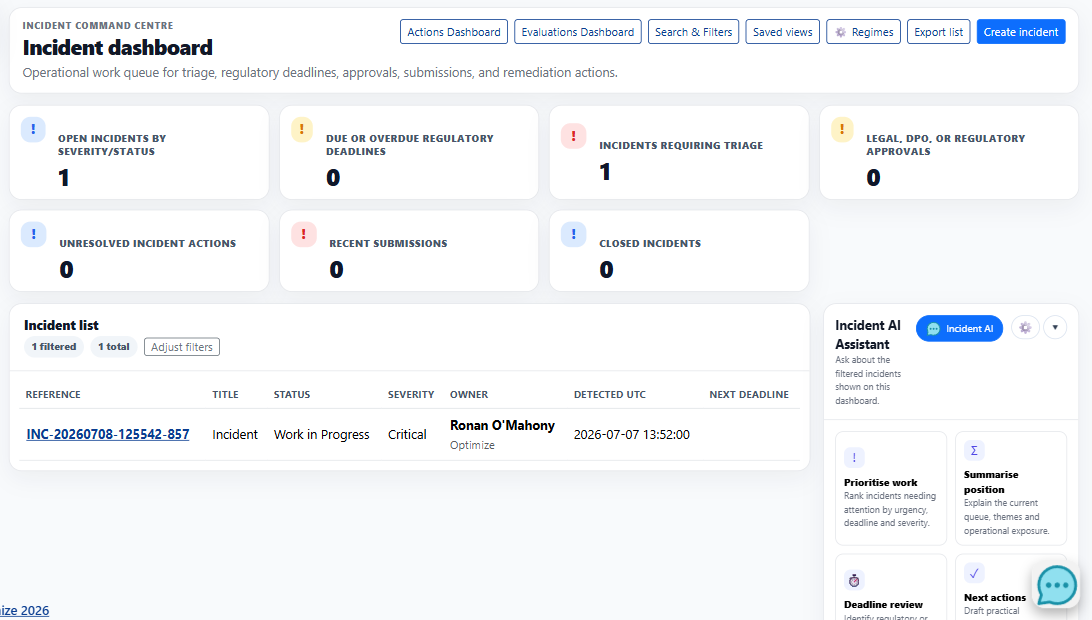
Use connected workspaces to preserve urgency, scope, ownership and the source record throughout follow-up.
Triage, deadlines, approvals, submissions and actions need one operational view.
Response and regulatory dates must remain visible with status and ownership.
Assurance programmes need evidence and relationship context attached to the scope.
Findings require visible assignees, risk, dates, status and closure.
The records differ, but the operating cycle stays visible and accountable.
Capture the incident, programme, agency, evaluation or finding in scope.
Apply status, severity, regime, risk, ownership and relationship context.
Collect evidence, link affected records and review the underlying position.
Coordinate triage, approval, reportability, scoring or assurance decisions.
Assign actions, owners, target dates and follow-up governance.
Track deadlines, completion, evidence quality and recurring review.
Apply saved or ad hoc filters across status, severity, ownership, department, regime, reportability, third-party involvement, personal data, cyber indicators and detected windows.
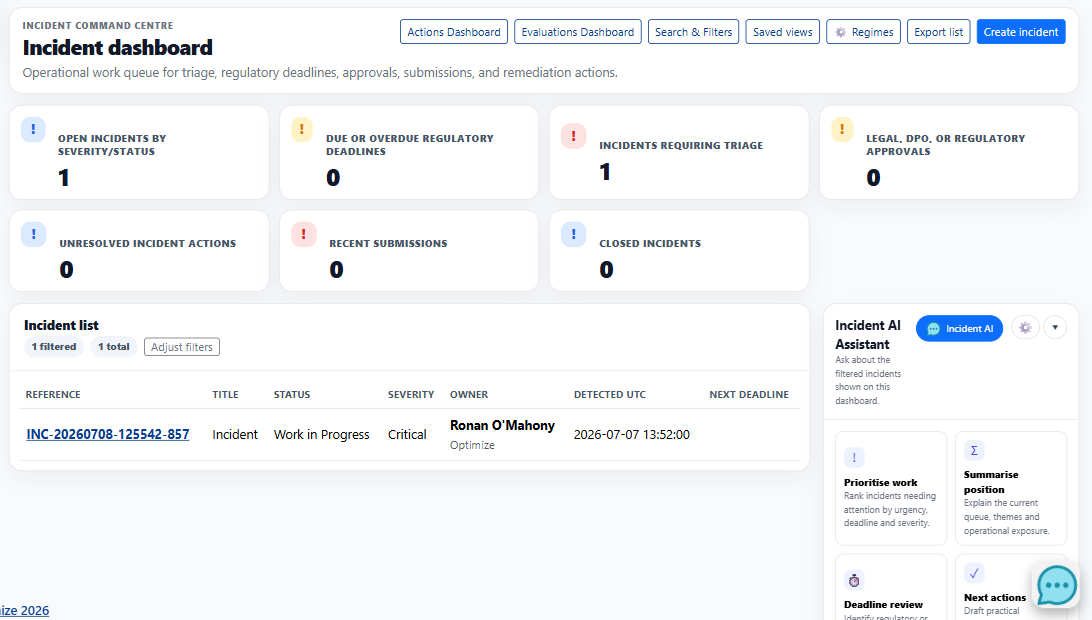
Use the same organisation, relationship, assessment and action foundations in both workspaces.
Manage triage, deadlines, approvals, submissions and remediation queues.
Review agencies, owners, sectors, programmes and participation.
Coordinate sessions, scores, due dates, currentness and access.
Explore capabilityReview support and relationship context for the selected agency or programme.
Track risk, assignee, status, target date and overdue follow-up.
Monitor scope, evaluations, overdue work, findings and data quality.
Explore capabilityUse the filtered records to rank priorities, summarise exposure, review deadline risk and frame remediation.
Use severity, status, ownership, due dates, scores and open findings.
Review the selected work set for recurring evidence, data-quality or deadline issues.
Regulatory interpretation and assurance conclusions should be verified by the appropriate responsible specialists.
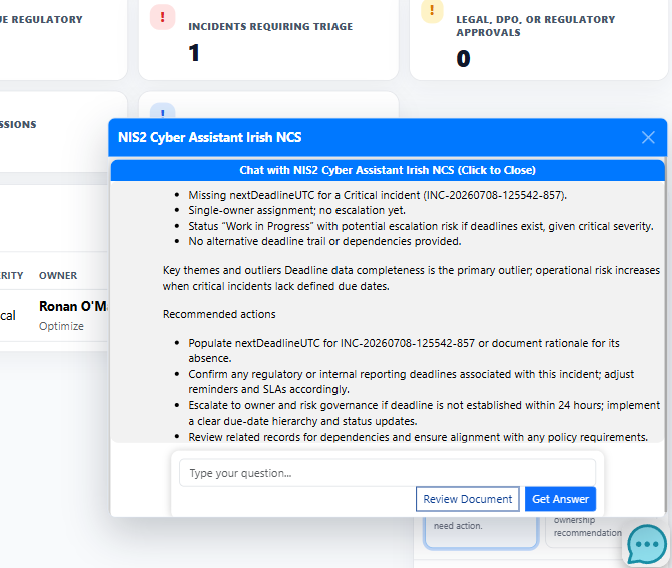
Keep the work queue, evidence, ownership and remediation attached to the same management context.
See urgent queues, deadlines and overdue programme work.
Connect affected organisations, services, third parties and evidence.
Track findings and remediation after the initial decision.
Use an incident process, agency portfolio or assurance programme to focus the product walkthrough.