Connected operating context
Model organisations, departments, people, services, systems, suppliers, contracts and named relationships.
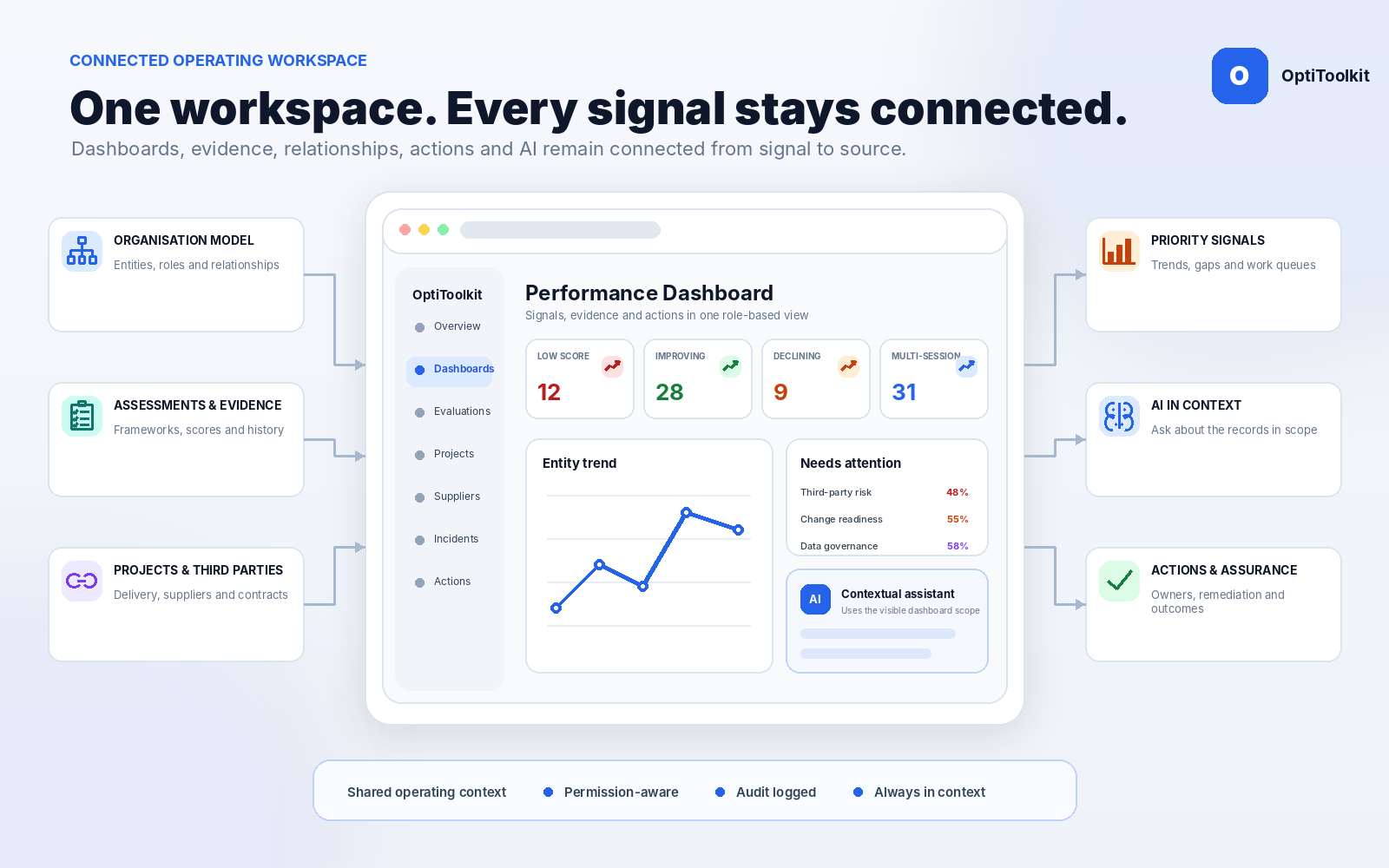
OptiToolkit brings organisation models, assessments, delivery records, third-party relationships, incidents, actions and assurance into a shared management cycle - helping teams move from fragmented evidence to accountable intervention.
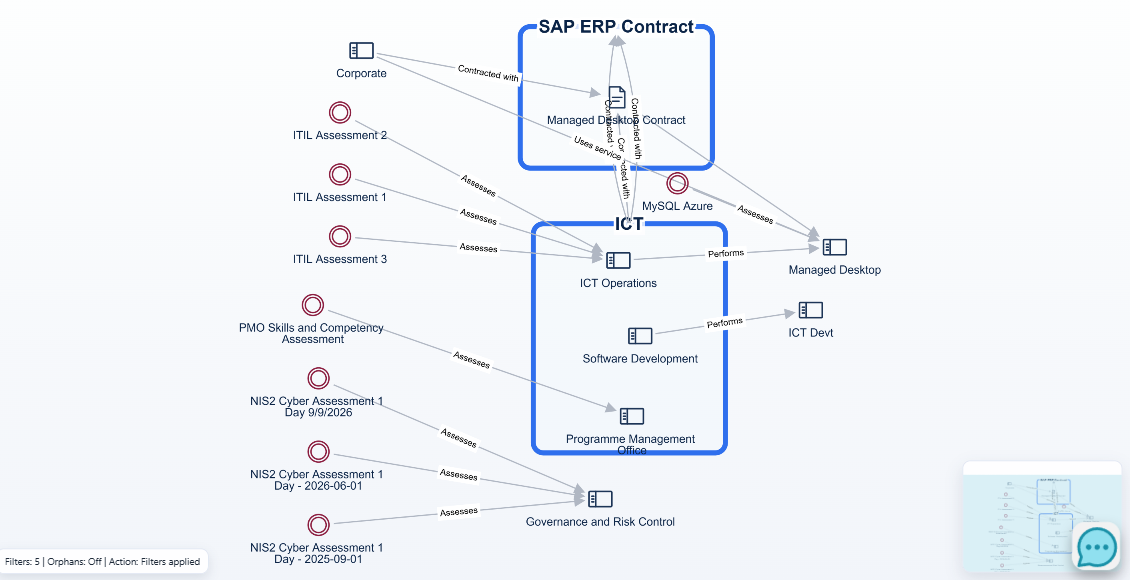
Reuse organisation, ownership and relationship records across assessments, projects, third parties, incidents, assurance and analytics rather than recreating them for every workflow.
Model organisations, departments, people, services, systems, suppliers, contracts and named relationships.
Apply structured assessment models, responses, scores and supporting evidence across multiple domains.
Move findings into owned actions with target dates, status and follow-up governance.
Use role-aware dashboards that lead from a signal into the records and actions behind it.
The records and decisions vary by domain, but the management discipline stays consistent.
Establish the organisations, services, systems, suppliers, contracts and roles in scope.
Apply a model, collect evidence and calculate a defensible current position.
Use dashboard signals, filters, comparisons and AI to focus attention.
Assign findings and remediation to owners with target dates and context.
Review delivery, compliance, third parties, incidents and programmes.
Reassess and compare evidence to demonstrate whether intervention worked.
Relationship-aware records connect a service to systems, suppliers, contracts, projects, assessments, accountable people and open actions.
Each capability page explains the records, decisions and actions supported by that part of the platform.
Models, evidence, scoring, trends, findings and accountable remediation.
Explore capabilityDelivery health, investment, benefits, budget, resources and optimisation.
Explore capabilityEntities, relationships, RACI, forums, artefacts and review cycles.
Explore capabilityDependencies, obligations, criticality, information gaps and renewal risk.
Explore capabilityQueues, deadlines, approvals, programmes, evidence and findings.
Explore capabilityPurpose-built agents and assistants embedded in operational context.
Explore capabilityDashboard assistants can receive the current filters, visible records and workflow context so the response stays connected to the management work in scope.
Rank the current work set using the signals visible in the dashboard.
Frame practical follow-up while keeping the source records available for verification.
AI output remains decision support and should be checked against source records and responsible professional judgement.
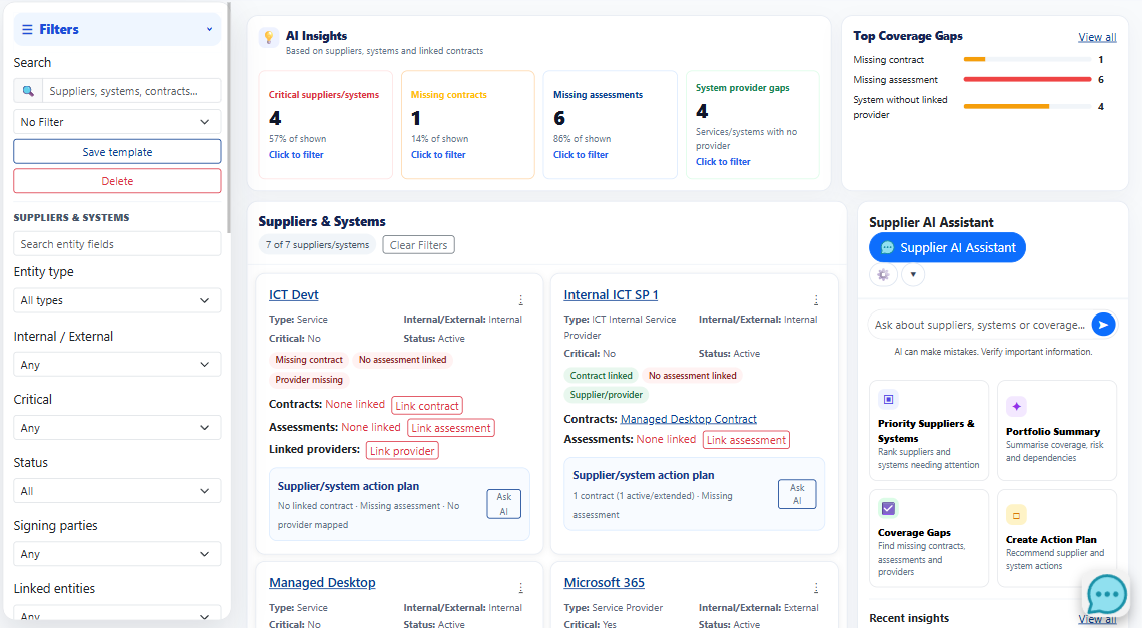
Different roles can use the same connected data while seeing the workspaces and records relevant to them.
Move from cross-domain signals into the evidence and records behind them.
Avoid recreating organisation, ownership and relationship data for every programme.
Track actions, reassessment and management trends after the initial analysis.
Choose the workflow, data scope and dashboards you want to explore in a focused product walkthrough.