Fragmented project data
Status, budget, benefits, ownership and risk are often reconciled manually.

Connect project ownership, status, investment, benefits, update age, assessments, actions and portfolio trends so leadership can focus attention where intervention will matter.
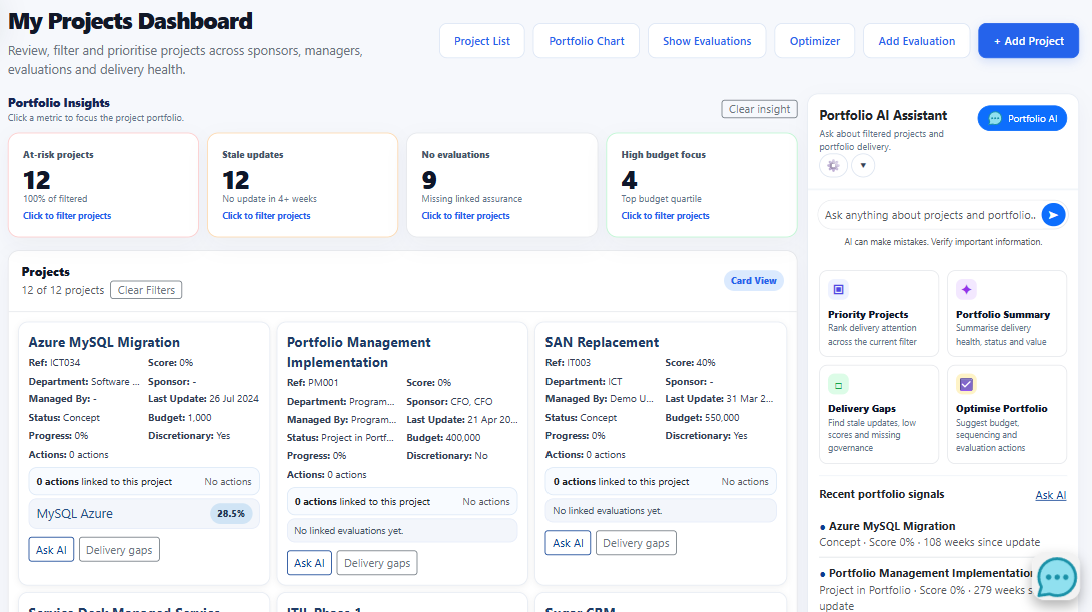
Bring the signals around every project into one operating picture.
Status, budget, benefits, ownership and risk are often reconciled manually.
Project lists do not clearly distinguish stale, low-scoring or high-impact work.
Governance roles, forums and assessment evidence are separated from delivery records.
Remediation can disappear into notes instead of an owned action backlog.
Use a shared cycle across programme, project and portfolio governance.
Record projects, ownership, status, budget, resource and key dates.
Apply lifecycle, benefits, risk, investment or governance models.
Review delivery, score, value, ownership and update-age signals.
Use portfolio metrics, filters and AI to focus intervention.
Assign remediation and adjust governance, sequencing or investment.
Monitor delivery, benefits, resources and reassessment trends.
Use portfolio insight metrics and filters to focus on stale updates, low scores, ownership patterns, budget ranges or specific delivery states.
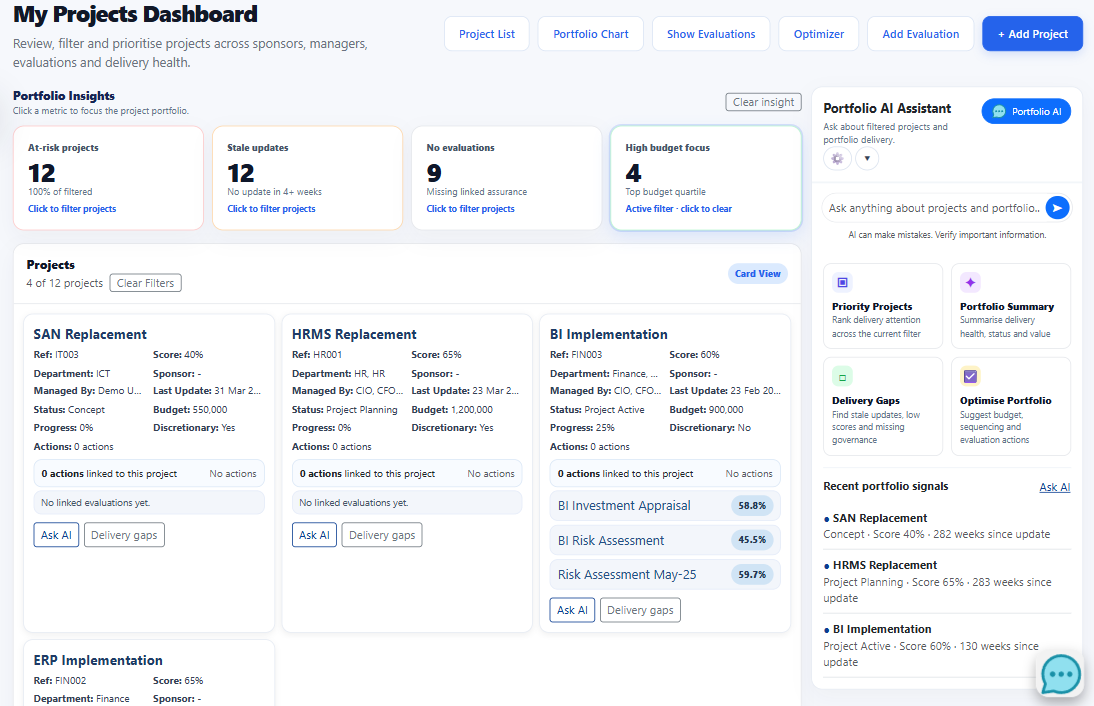
Use the platform components required for a defensible portfolio view rather than another isolated project list.
Capture projects, owners, status, budgets, resources and portfolio structure.
Evaluate benefits, lifecycle maturity, risk, investment and governance performance.
Explore capabilityRelate projects to departments, services, systems, suppliers and contracts.
Explore capabilityAssign findings, owners and dates, then review open or overdue work.
Analyse benefits, budgets, resources, completion and status over time.
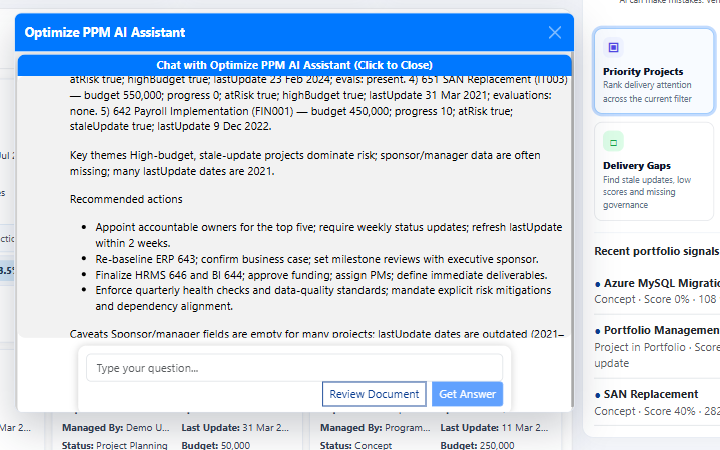
Rank priorities, identify delivery gaps and frame optimisation options.
Explore capabilityThe assistant can receive the filtered project data and help rank priorities, summarise delivery health, identify gaps and suggest sequencing or optimisation actions.
Rank visible projects using delivery health, update age, assessments and open actions.
Use the current budget, delivery and benefits context to frame options.
Recommendations remain decision support and should be verified against delivery constraints, financial data and leadership judgement.
The target is not more reporting. It is clearer management focus and visible action.
See which projects need attention and the evidence behind the signal.
Link delivery to ownership, assessment, forums, artefacts and dependencies.
Track remediation, reassessment and portfolio trends over time.
Use a sample or current portfolio challenge to see how OptiToolkit connects projects, assessments, actions and leadership priorities.